
Can You Run an Air Fryer in a Campervan ? | What You Need
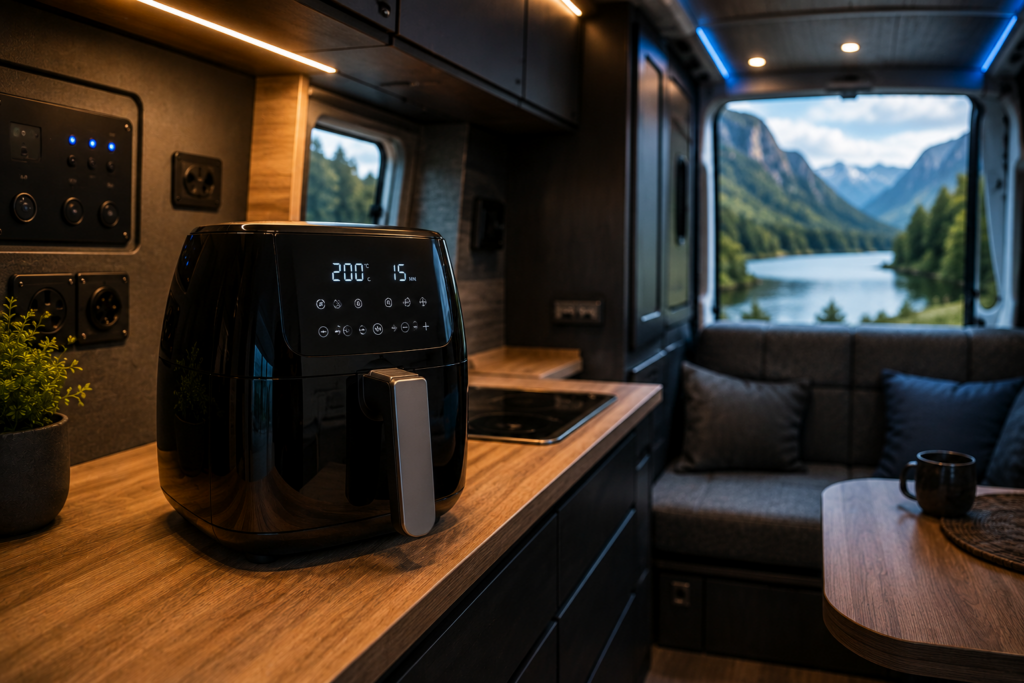
A campervan air fryer can make off-grid cooking far more practical. It is quick, compact and ideal for everything from chips and chicken to reheating meals after a day on the road.
However, an air fryer is also one of the highest-power appliances people add to a van. That means you cannot simply plug one into a small inverter and expect a basic leisure battery setup to cope.
To run a campervan air fryer properly away from hook-up, you need the right inverter, lithium battery capacity, charging system, cabling and protection. Get the system right and you can cook comfortably off-grid without constantly worrying about flat batteries or overloads.
VanVolt builds campervan electrical packages around real use. That means looking at what you want to power, how long you stay off-grid, how you recharge and whether high-power appliances are part of your plans.
Can You Run a Campervan Air Fryer From a Battery?
Yes, but the battery does not power the air fryer directly.
A campervan air fryer uses 230V power. Therefore, you need a pure sine wave inverter to convert power from the 12V leisure battery into usable 230V power.
Most air fryers draw between 800W and 2,000W. Compact single-drawer models often sit at the lower end, while larger air fryers can draw considerably more.
| Air fryer type | Typical power draw | Typical setup requirement |
|---|---|---|
| Compact model | 800W–1,000W | Smaller inverter and lithium battery setup may suit |
| Standard air fryer | 1,200W–1,800W | Usually needs a stronger inverter and larger lithium battery |
| Large or dual-drawer model | 1,800W–2,400W | Often needs a high-power inverter and higher-capacity battery bank |
A 1,000W inverter may suit a very small air fryer. However, it leaves little spare capacity and will not run most standard kitchen-style models.
For most campervan air fryer plans, you will normally need at least a 2,000W pure sine wave inverter and a suitable lithium battery bank. If you want to cook off-grid regularly, run larger appliances or use more than one high-power appliance during a trip, a larger battery and inverter setup may be the better route.
The correct answer depends on your exact air fryer, battery capacity, vehicle, charging method, roof space and how often you plan to cook away from hook-up.
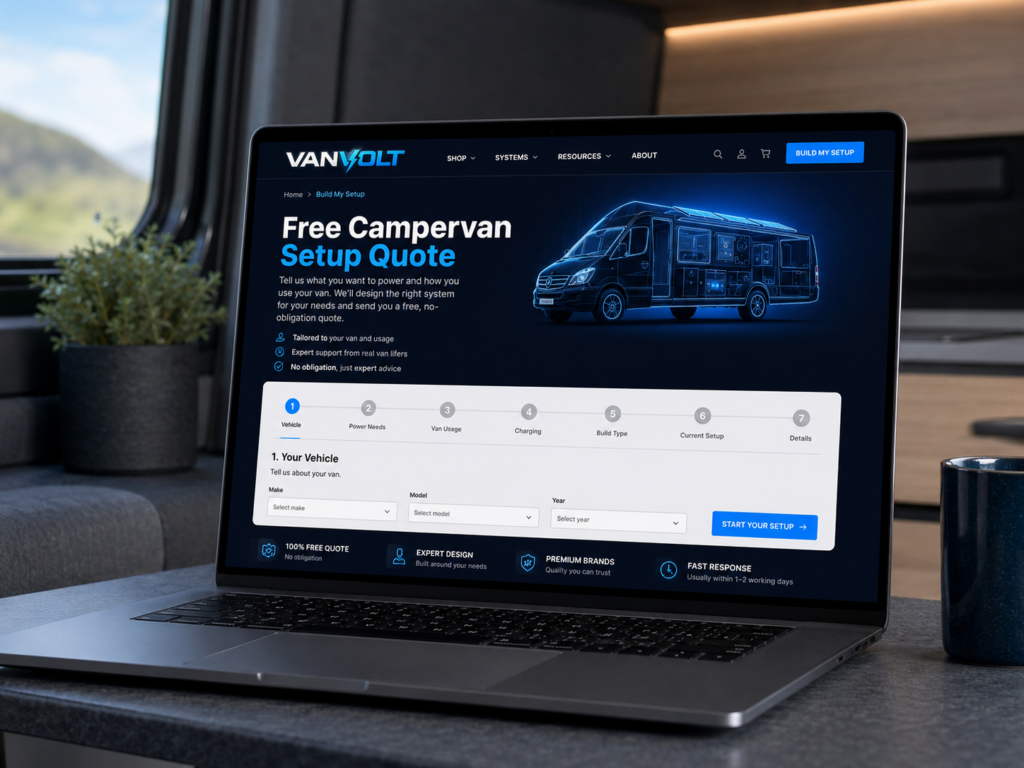
Start your setup here: https://vanvolt.co.uk/build-my-setup/
Not sure what your van needs?
Complete VanVolt’s Build My Setup form with your van details, appliances and off-grid plans. We will recommend a matched DIY electrical package with the right battery, inverter, charging equipment, cabling and protection for your build.
Why Air Fryers Use So Much Campervan Battery Power
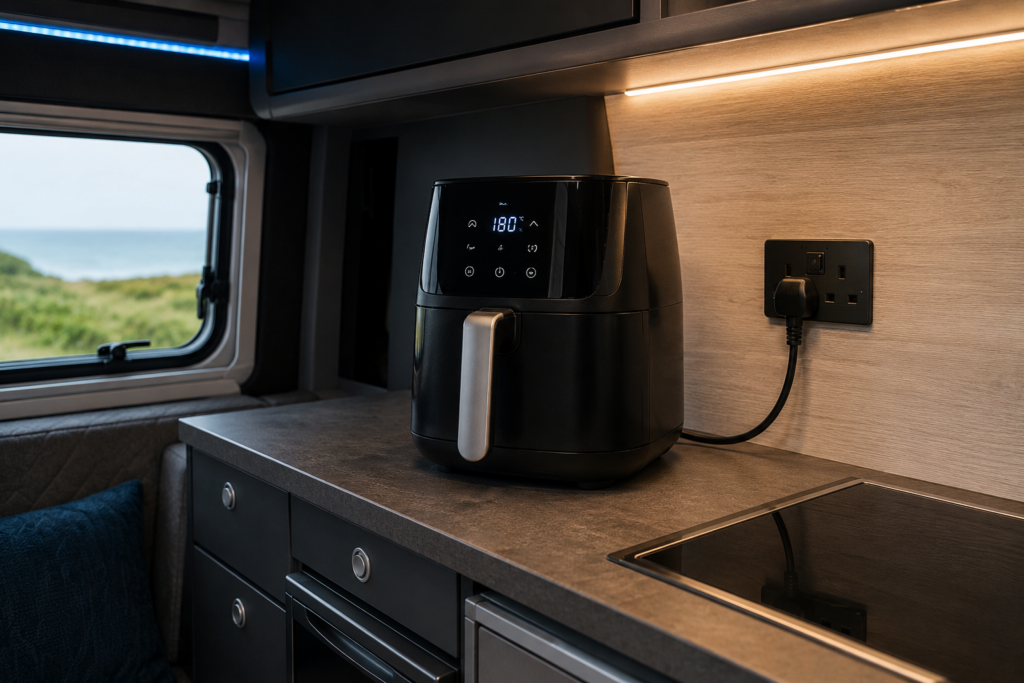
Air fryers heat food quickly, which makes them efficient compared with a conventional oven. However, they still pull a lot of power over a short period.
For example, a 1,500W air fryer running for 15 minutes uses around 375Wh before allowing for inverter losses.
Once you include inverter efficiency, the battery may need to supply roughly 420Wh to 450Wh.
That is a sizeable amount of energy in a 12V electrical system.
| Appliance | Typical use | Approximate energy use |
|---|---|---|
| LED lights | 4 hours | 40Wh–120Wh |
| Laptop charging | 2 hours | 90Wh–200Wh |
| Diesel heater | Overnight | 100Wh–300Wh |
| Compressor fridge | 24 hours | 300Wh–700Wh |
| Campervan air fryer | 15 minutes | 300Wh–500Wh |
Consequently, one air fryer meal can use similar energy to an evening of lights, phone charging and entertainment.
That does not mean you should avoid an air fryer. It means your campervan electrical system must be designed around it.
What Battery Size Do You Need for a Campervan Air Fryer?
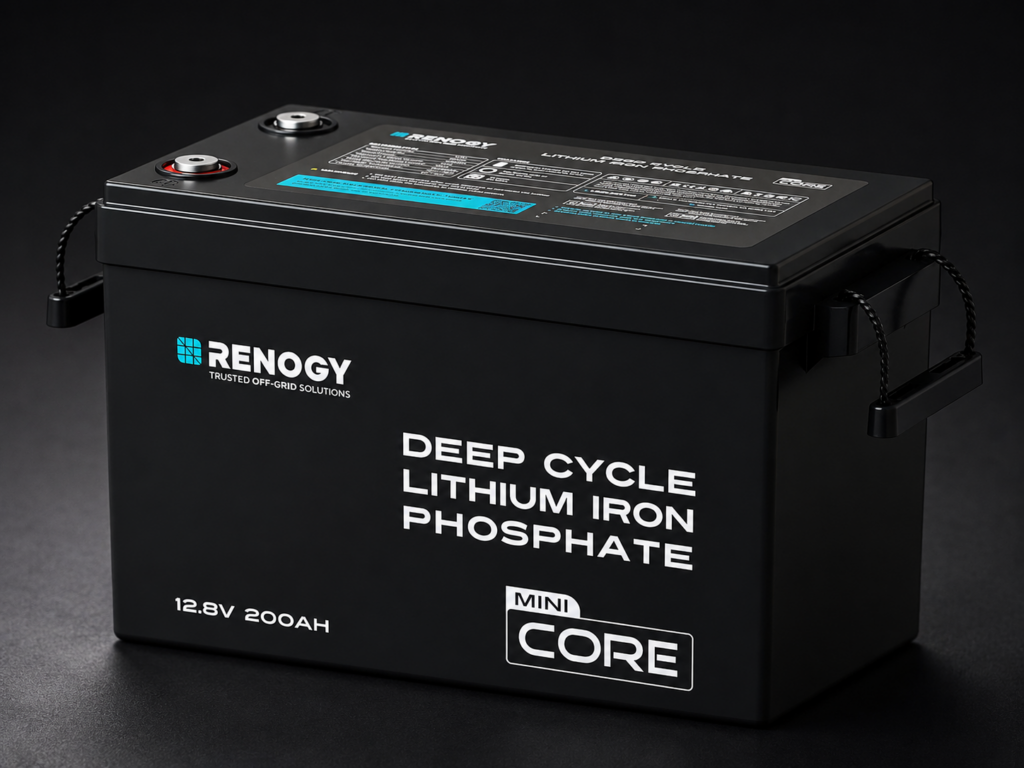
A 200Ah lithium battery is usually the sensible starting point for occasional air fryer use.
A 100Ah lithium battery can technically run a compact air fryer. However, it does not leave much capacity for the fridge, diesel heater, water pump, lights, fan, USB charging and normal daily use.
A 200Ah LiFePO4 battery stores roughly 2,400Wh of energy. In real use, after allowing for sensible discharge levels and inverter losses, you may have around 1,900Wh to 2,100Wh available.
That can cover a short air fryer session alongside normal touring loads.
| Battery capacity | Best for | Air fryer suitability |
|---|---|---|
| 100Ah lithium | Weekend vans and low-power use | Only occasional use with a compact model |
| 200Ah lithium | Touring, fridge, heater, solar and inverter use | Good starting point for occasional air fryer cooking |
| 300Ah lithium | Longer off-grid stays and regular inverter use | Better choice for frequent air fryer use |
| 460Ah+ lithium | Serious off-grid travel and multiple high-power appliances | Best for regular electric cooking |
For regular off-grid cooking, we would usually recommend a 300Ah lithium battery with a 3,000W inverter.
That gives you more usable capacity, stronger inverter headroom and less pressure on the system.
The Inverter Matters as Much as the Battery
A 12V battery must supply a huge amount of current to create 230V power.
For example, a 1,500W air fryer can draw well over 130 amps from the leisure battery once inverter losses are included. Therefore, the inverter setup needs more than a battery and a plug socket.
It needs:
- Correctly sized high-current cabling.
- A suitable inverter fuse close to the battery.
- Secure crimped lugs and terminals.
- Proper isolation.
- Suitable positive and negative distribution.
- A battery capable of supplying the required current.
- Sensible ventilation around the inverter.
Thin cable, poor terminations or undersized fuses can create heat and voltage drop. More importantly, they can make a high-current campervan system unsafe.
VanVolt packages are planned as complete systems, including battery, charging, inverter, protection, cabling and supporting parts. The exact package depends on the van, appliances and intended use.
Typical 12V Current Draw for Air Fryer Use
| Air fryer load | Approximate battery current draw |
|---|---|
| 800W | 75A–85A |
| 1,200W | 110A–125A |
| 1,500W | 135A–150A |
| 1,800W | 165A–180A |
| 2,000W | 185A–205A |
These figures are approximate. Battery voltage, inverter efficiency and the appliance’s true running demand all affect the final current draw.
However, they show why a campervan air fryer is not suitable for a small plug-and-play inverter setup.
VanVolt Build Tip
Thinking about an air fryer, microwave, coffee machine or induction hob for your campervan?
Follow the VanVolt Facebook page for practical DIY electrical tips, real package builds and straight-talking off-grid advice.
Follow VanVolt on Facebook
How Much Solar Do You Need for a Campervan Air Fryer?
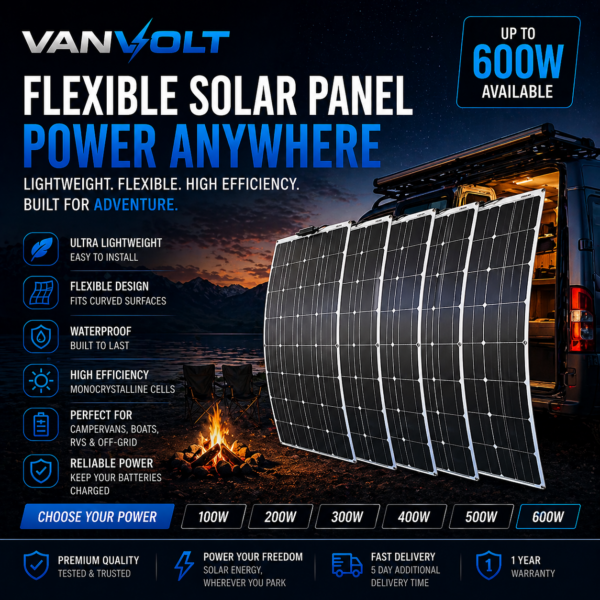
Solar helps to replace the energy you use. It does not make a high-power appliance free to run.
A 400W solar setup can generate a useful amount of energy during a bright UK summer day. However, solar output changes constantly depending on cloud, shade, season, roof angle and where you park.
| Conditions | Possible daily output from 400W solar |
|---|---|
| Bright summer day | 1,200Wh–2,000Wh |
| Mixed weather | 500Wh–1,200Wh |
| Dull winter day | 100Wh–500Wh |
Therefore, a 400W solar setup may replace an air fryer cooking session in good conditions. It may not replace it in winter or under tree cover.
For that reason, high-power campervan systems should use several charging routes:
- Lithium battery storage for immediate power.
- DC-DC charging while driving.
- Solar charging for off-grid stays.
- Mains charging when you use hook-up or charge before a trip.
VanVolt packages can include battery charging, solar, inverter provision, protection, cabling and outlets as one matched DIY setup.
Can You Use an Air Fryer on Campsite Hook-Up?
Yes, and it is often the easiest option.
When connected to campsite hook-up, the air fryer can run from the campsite supply through a correctly installed consumer unit, suitable RCD or RCBO protection and properly rated sockets.
That means you do not need to pull the cooking load from your leisure battery.
However, campsite supplies can be limited. Many sites provide 6A or 10A hook-up.
A 1,500W air fryer uses around 6.5A at 230V. Therefore, if you also run a kettle, fan heater, water heater or battery charger, you could trip the campsite bollard.
Use one high-power appliance at a time.
The same applies off-grid. Even a powerful battery and inverter setup should not be treated like a household supply.
Image suggestion 2: Your VanVolt package photo showing the branded “Matched DIY Package Inside” boxes.
Placement: Immediately after this section.
Caption: VanVolt matched DIY campervan electrical packages are packed and prepared around each customer’s build.
Alt text: Two VanVolt matched DIY campervan electrical packages prepared for dispatch.
What Does a Proper Campervan Air Fryer Setup Include?
A high-power campervan setup needs more than an inverter.
Here is a sensible starting point for occasional off-grid air fryer use:
| Component | Recommended starting point |
|---|---|
| Leisure battery | 200Ah LiFePO4 |
| Inverter | 2,000W pure sine wave |
| Solar | 260W–400W, depending on roof space |
| Vehicle charging | Suitable DC-DC charger |
| Mains charging | Lithium-compatible mains charger |
| Protection | Battery fuse, inverter fuse, isolators and busbars |
| Cabling | Correctly sized high-current inverter cable |
| Monitoring | Battery monitor or shunt |
For regular high-power cooking, step up to:
| Component | Stronger off-grid recommendation |
|---|---|
| Leisure battery | 300Ah LiFePO4 minimum |
| Inverter | 3,000W pure sine wave |
| Solar | Around 400W where roof space allows |
| Vehicle charging | Strong DC-DC charging matched to the vehicle |
| Mains charging | Lithium-profile charger suitable for the battery bank |
| Protection | Full battery, inverter and distribution protection |
| Monitoring | Proper battery monitor and shunt |
The exact cable size, fuse rating and charging specification depend on the equipment selected and the cable run length. High-current DC and 230V work should always be installed and tested by a competent person. VanVolt supplies DIY electrical packages for fitting by you or your chosen installer.
Is a Campervan Air Fryer Worth It?
For many people, yes.
An air fryer is one of the easiest ways to make a campervan feel more flexible. It gives you quick electric cooking without carrying extra gas canisters or relying on a campsite kitchen.
However, it is worth it only when you build the electrical system around the appliance.
A small weekend van with lights, USB charging and a compressor fridge does not need the same setup as a longer-term off-grid build with an air fryer, microwave and coffee machine. VanVolt’s high-power packages are designed for customers who want to run appliances such as air fryers, microwaves and induction hobs from their battery system.
Final Thoughts: Build Around What You Want to Power

You can run a campervan air fryer off-grid. However, the best results come from planning the full electrical system before buying individual parts.
For occasional use, start with a 200Ah lithium battery and a 2,000W pure sine wave inverter. For frequent off-grid cooking, a 300Ah lithium battery, 3,000W inverter and strong charging setup will give you a far better experience.
The key is not buying the biggest battery or inverter at random. It is choosing a matched setup that suits your van, your appliances, your travel plans and your budget.
VanVolt helps you do exactly that. Tell us what you want to power, how long you plan to stay off-grid and how you want to recharge. We will recommend a complete matched DIY campervan electrical package, ready for fitting by you or your chosen installer.
For more real-world campervan electrical advice, daily build inspiration and package updates, follow and like VanVolt on Facebook