
How Much Solar Do You Need for a Campervan in the UK?
Choosing the right campervan solar panel size can make a huge difference to how long you can stay off-grid.
Solar can keep your leisure battery topped up while parked, reduce your reliance on campsite hook-up and give you more freedom to travel. However, the right setup depends on your battery size, appliances, roof space, driving habits and the unpredictable UK weather.
A simple weekend van may only need modest solar support. By contrast, a touring van with a compressor fridge, diesel heater, laptop charging and several nights away from hook-up will usually need a stronger setup.
VanVolt builds matched DIY campervan electrical packages around real use. That can include solar panels, mounting parts, roof-entry components, solar controllers, cabling, fuses, battery charging and the supporting equipment needed for the full system.
How Does Campervan Solar Work?
Solar panels collect daylight and turn it into electrical power.
That power travels through a solar controller before charging the leisure battery. The stored energy can then run your lights, fridge, USB outlets, water pump, diesel heater, roof fan and other 12V equipment.
To work safely, a campervan solar system normally includes:
- Solar panel or panels
- Mounting brackets or adhesive fixing system
- Waterproof roof gland
- Solar cable and connectors
- Solar fuse or isolation
- Solar charge controller
- Battery-side cabling and protection
Furthermore, solar works best with other charging methods. A DC-DC charger can recharge the leisure battery while you drive, while mains charging gives you another option on hook-up or before a trip.
How Much Solar Do You Need for a Campervan?
For many UK campervans, 260W to 400W of solar is a practical target.
The right campervan solar panel size depends on your daily power use, available roof space and battery capacity.
| Campervan use | Typical solar recommendation |
|---|---|
| Lights, USB charging and water pump | 100W–200W |
| Weekend van with compressor fridge | 200W–260W |
| Fridge, diesel heater, fan and laptop use | 260W–400W |
| Longer off-grid stays with inverter use | 400W+ |
| Air fryer, microwave or induction hob off-grid | Solar helps, but battery and charging design matter more |
Although larger panels sound better, they do not automatically create a better setup. For instance, fitting 400W of solar to a small battery can create an unbalanced system if the charging equipment and protection do not match.
As a result, choose solar as part of the complete electrical plan rather than as a standalone upgrade.
How Much Power Will Campervan Solar Produce in the UK?
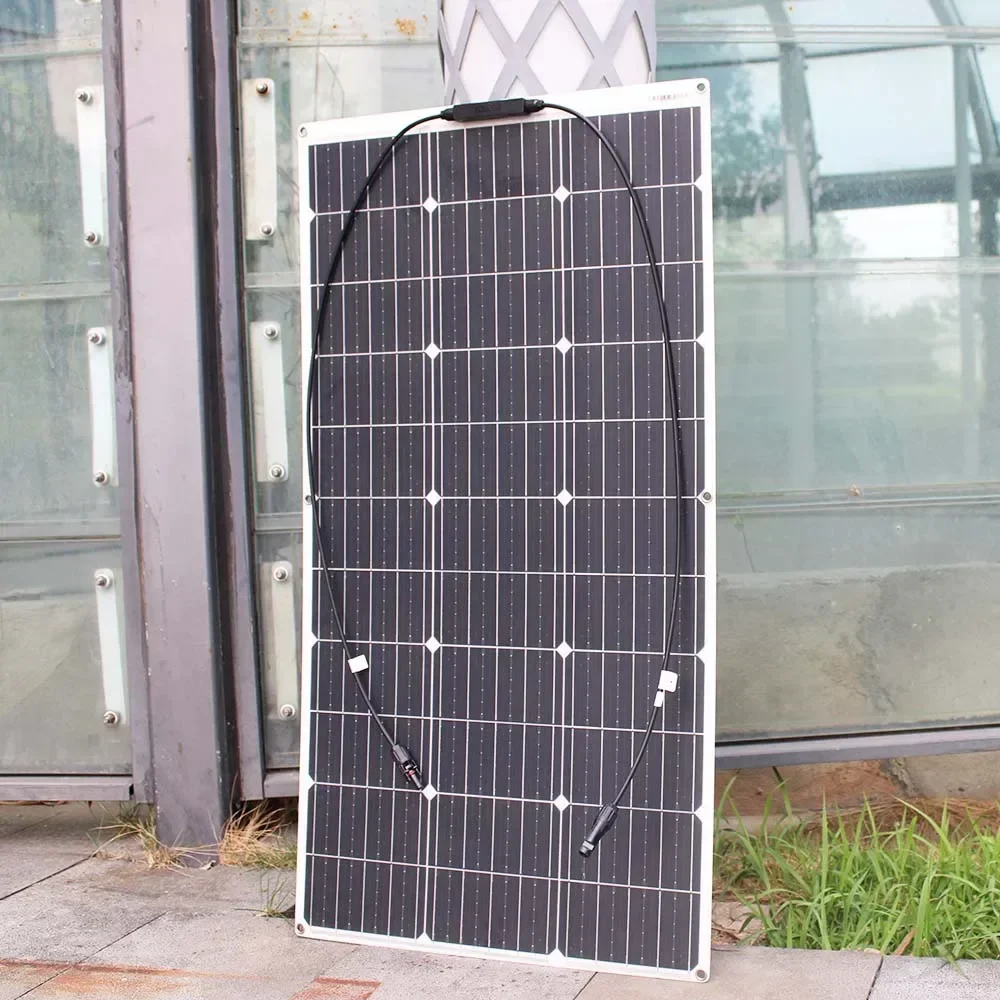
A solar panel’s wattage rating shows maximum output under ideal test conditions. In real use, output changes throughout the day.
Cloud cover, shade, low winter sun, dirt, roof vents and parking direction all reduce production. Consequently, a 400W solar array will not provide 400W continuously.
| Weather and season | Typical daily output from 400W solar |
|---|---|
| Bright UK summer day | 1,200Wh–2,000Wh |
| Mixed spring or autumn day | 500Wh–1,200Wh |
| Dull winter day | 100Wh–500Wh |
| Heavy shade or poor parking position | Very limited output |
Therefore, solar should extend your off-grid time rather than become your only charging plan.
A compressor fridge can use around 300Wh to 700Wh in a day. In hotter weather, it can use more. This means a cloudy day may not replace every watt-hour you use.
Is 200W of Solar Enough for a Campervan?
For a basic weekend campervan, 200W of solar can work well.
In favourable weather, it can support lights, USB charging, water pump use and part of the energy needed by a compressor fridge. However, it may struggle during winter, after several stationary days or when you use a fridge and diesel heater regularly.
Around 200W can suit you when:
- You mainly travel during spring and summer
- You drive regularly
- You use campsites or hook-up sometimes
- Your electrical use stays fairly light
- Roof space is limited
Nevertheless, 200W rarely makes a campervan fully independent in every UK condition.
Is 260W of Solar Better for a Campervan?
For many touring builds, yes.
Compared with a smaller array, 260W gives more useful charging capacity for normal use. As a result, it suits vans with a compressor fridge, diesel heater, lights, charging points and moderate off-grid plans.
| Typical use | Is 260W solar suitable? |
|---|---|
| Lights and USB charging | Excellent |
| Water pump and roof fan | Good |
| Compressor fridge | Good in suitable weather |
| Diesel heater | Helpful, although battery capacity still matters |
| Laptop charging | Usually suitable |
| Two to three nights off-grid | Good with suitable charging |
| Frequent inverter use | Limited |
In addition, a 260W setup works best with a suitable lithium battery and DC-DC charger. Solar supports the system while parked, whereas DC-DC charging helps replace energy while driving.
Is 400W of Solar Worth It on a Campervan?
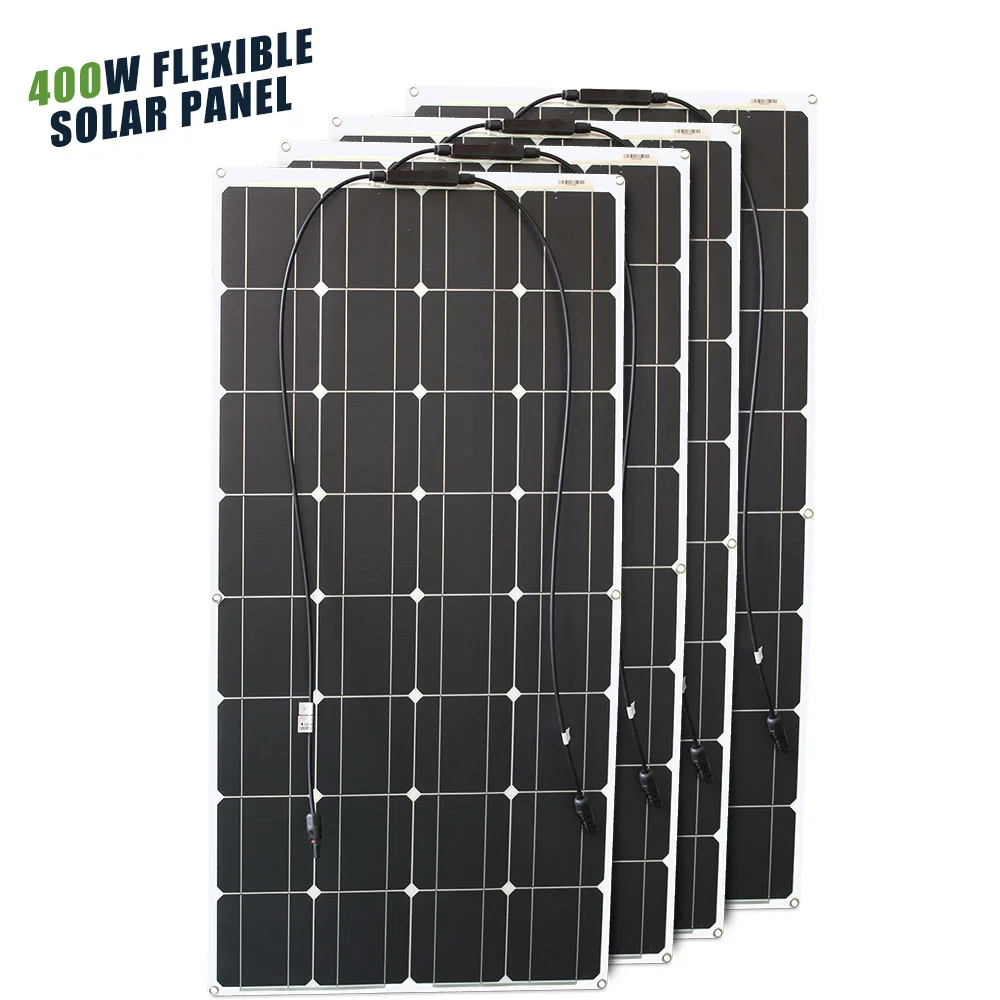
For greater freedom away from campsites, 400W of solar is worth considering.
In particular, it suits vans with a compressor fridge, diesel heater, roof fan, laptop charging, Wi-Fi router, television or regular battery use over several days.
Likewise, a larger solar array makes more sense with a 200Ah or 300Ah lithium battery. It gives the battery a better chance to recharge while you are parked.
However, 400W solar does not make high-power appliances effortless.
Air fryers, microwaves, coffee machines and induction hobs can use a large amount of battery power in a short time. Solar may help replace that energy in good weather, but the battery, inverter, heavy cabling and protection remain the priority. VanVolt’s high-power packages are designed around the correct inverter, lithium capacity, cabling and fuse protection.
VanVolt Build Tip
Solar is brilliant for topping up your battery while parked. However, it is not a replacement for choosing the right battery capacity first.
Follow VanVolt on Facebook for practical campervan electrical advice, real package builds and off-grid inspiration
Solar Panel Size vs Battery Size
Your solar array should match the battery bank and how you use the van.
On a bright day, a small battery can fill quickly. By contrast, a larger battery needs more charging input after several days off-grid.
| Battery size | Common solar range | Typical use |
|---|---|---|
| 100Ah lithium | 100W–260W | Weekend vans and basic loads |
| 200Ah lithium | 260W–400W | Touring, fridge, heater and off-grid stays |
| 300Ah lithium | 400W+ | Longer off-grid use and stronger inverter demand |
These figures are starting points rather than fixed rules.
For example, a 200Ah battery with 400W solar can work very well for someone who stays parked for long periods. On the other hand, a 300Ah battery with limited solar may still suit a person who drives most days and uses an effective DC-DC charging setup.
Do You Need an MPPT Solar Controller?
In most campervan solar systems, an MPPT controller is the preferred option.
An MPPT controller helps convert panel voltage into useful charging power for the leisure battery. Consequently, it can improve charging performance when sunlight is less than ideal.
The controller must suit:
- The solar panel voltage
- The total solar wattage
- The battery chemistry
- The cable size
- The fuse protection
- The way the panels are wired
In addition, the controller must be suitable for the expected charging current and the wider protection setup.
Do not simply buy the biggest controller available. Instead, choose one around the solar array and battery system.
Will Solar Charge Your Campervan Battery in Winter?
Yes, but winter output is usually far lower.
Although UK winter solar can help maintain a battery, shorter days, poor weather and low sun angles reduce performance significantly.
A 400W array may cover a little lighting and charging on a reasonable winter day. Even so, it may not fully support a fridge, heater, roof fan and inverter use for several days.
Therefore, winter touring benefits from a backup charging plan:
- Solar charging while parked
- DC-DC charging while driving
- Mains charging on hook-up or before departure
- Enough lithium battery capacity for expected use
Together, these charging routes give you more flexibility than roof solar alone.
Common Campervan Solar Mistakes
Choosing panels before calculating power use
Although a large panel can look impressive, it may not solve the issue when your battery is too small or your power demand is too high.
Start by working out what you want to power each day.
Expecting solar to run high-power appliances directly
Solar charges the battery first. Then, the battery and inverter supply your appliances.
For example, a 400W panel cannot directly run a 1,500W air fryer.
Forgetting about shade
Even small shadows from roof vents, aerials or trees can reduce panel output significantly.
Therefore, plan the panel layout carefully before mounting anything.
Ignoring cable, fuses and roof-entry protection
A solar panel needs suitable cable routing, fusing, waterproof roof entry and battery-side protection.
Therefore, the visible roof panel is only one part of the complete electrical system.
Relying on solar alone
Solar can work brilliantly in the right conditions. Nevertheless, UK weather can change quickly.
DC-DC charging and mains charging provide useful backup when solar output falls.
How to Choose the Right Campervan Solar Setup

Before choosing a campervan solar panel size, ask yourself:
- How many nights do you usually stay off-grid?
- Do you use a compressor fridge?
- Will you run a diesel heater or roof fan?
- Do you work from the van?
- Are you adding an inverter?
- Do you travel mostly in summer or all year?
- How much roof space do you have?
- Do you drive frequently?
- Do you use campsite hook-up?
- What battery capacity are you considering?
VanVolt’s Build My Setup form is designed around these questions. Tell us about your vehicle, appliances, off-grid plans and budget, and we can recommend a matched DIY package with suitable solar, battery, charging, cabling and protection.
Final Thoughts
For a simple weekend van, 100W to 200W solar may be enough. However, normal touring with a compressor fridge, lights, charging and heating often benefits from 260W to 400W.
For serious off-grid travel, solar should form part of a wider setup with enough lithium battery capacity, DC-DC charging, mains charging and suitable electrical protection. In other words, the panel is only one part of the power plan.
Ultimately, the best system is not the one with the biggest panel. Instead, it is the one that works properly with your van, appliances and travel plans.
Complete VanVolt’s Build My Setup form for a matched campervan electrical package recommendation. VanVolt will help you choose the solar, battery, charging and protection equipment that suits your build.